Communication Design Show
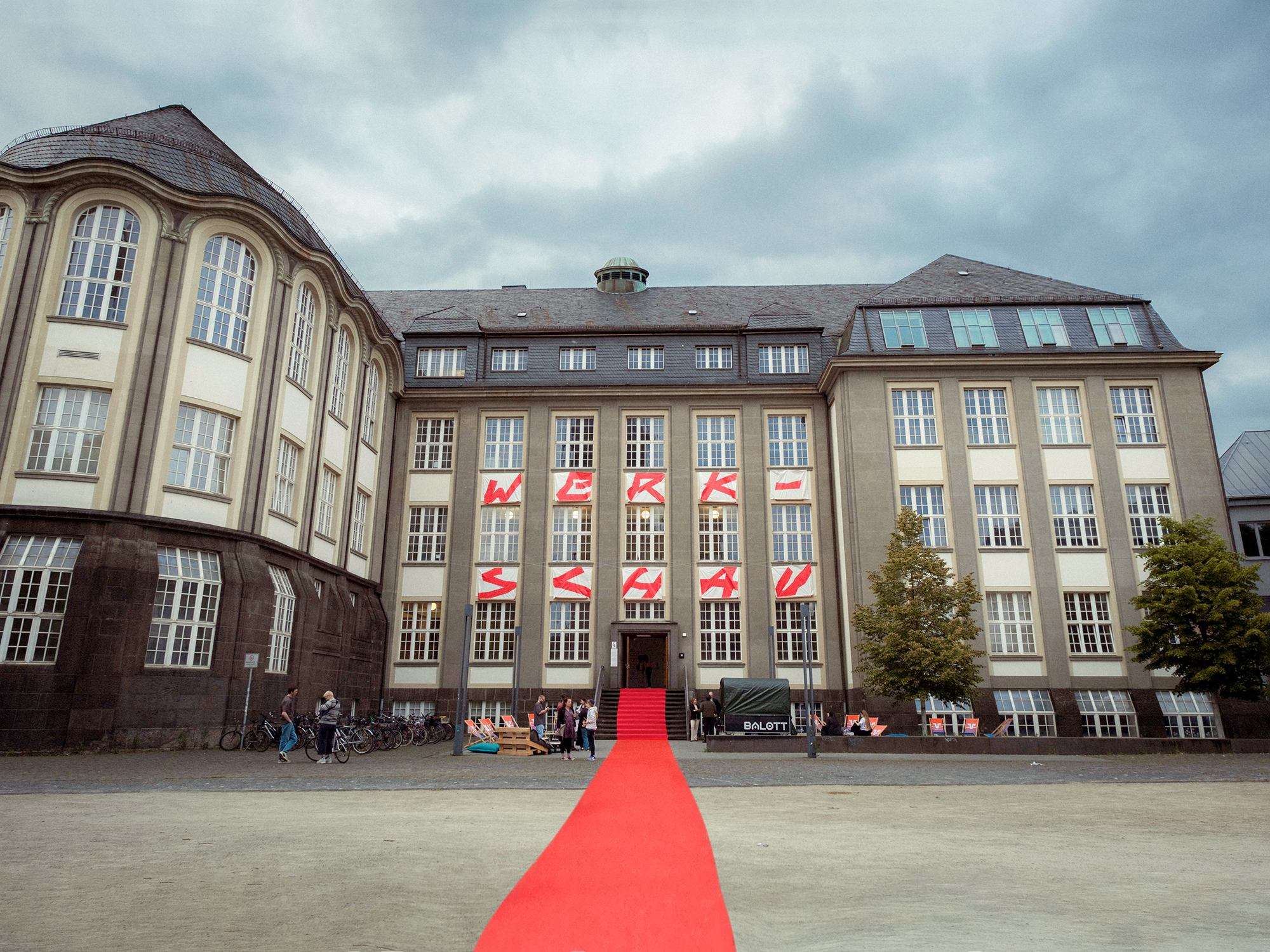
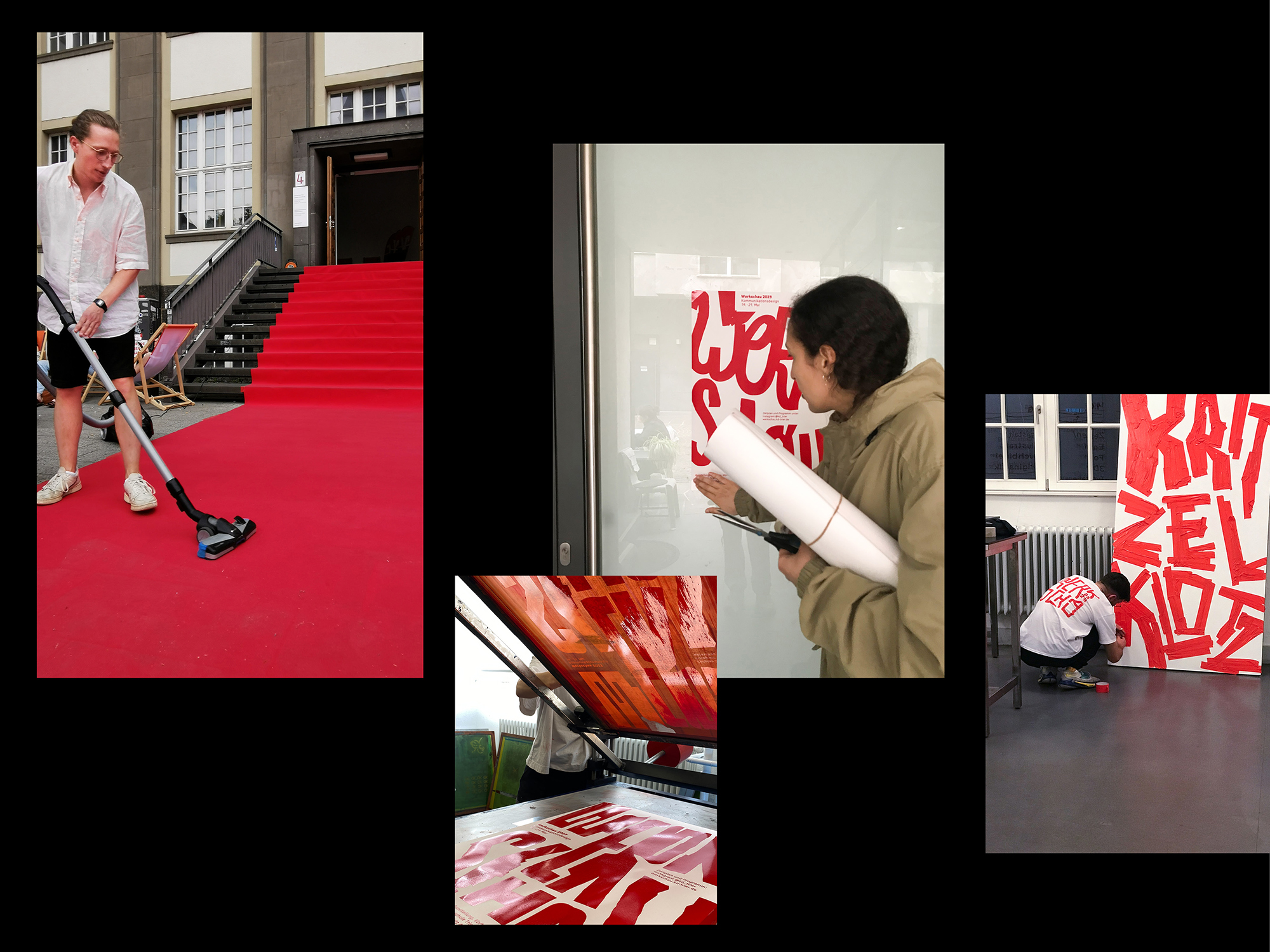
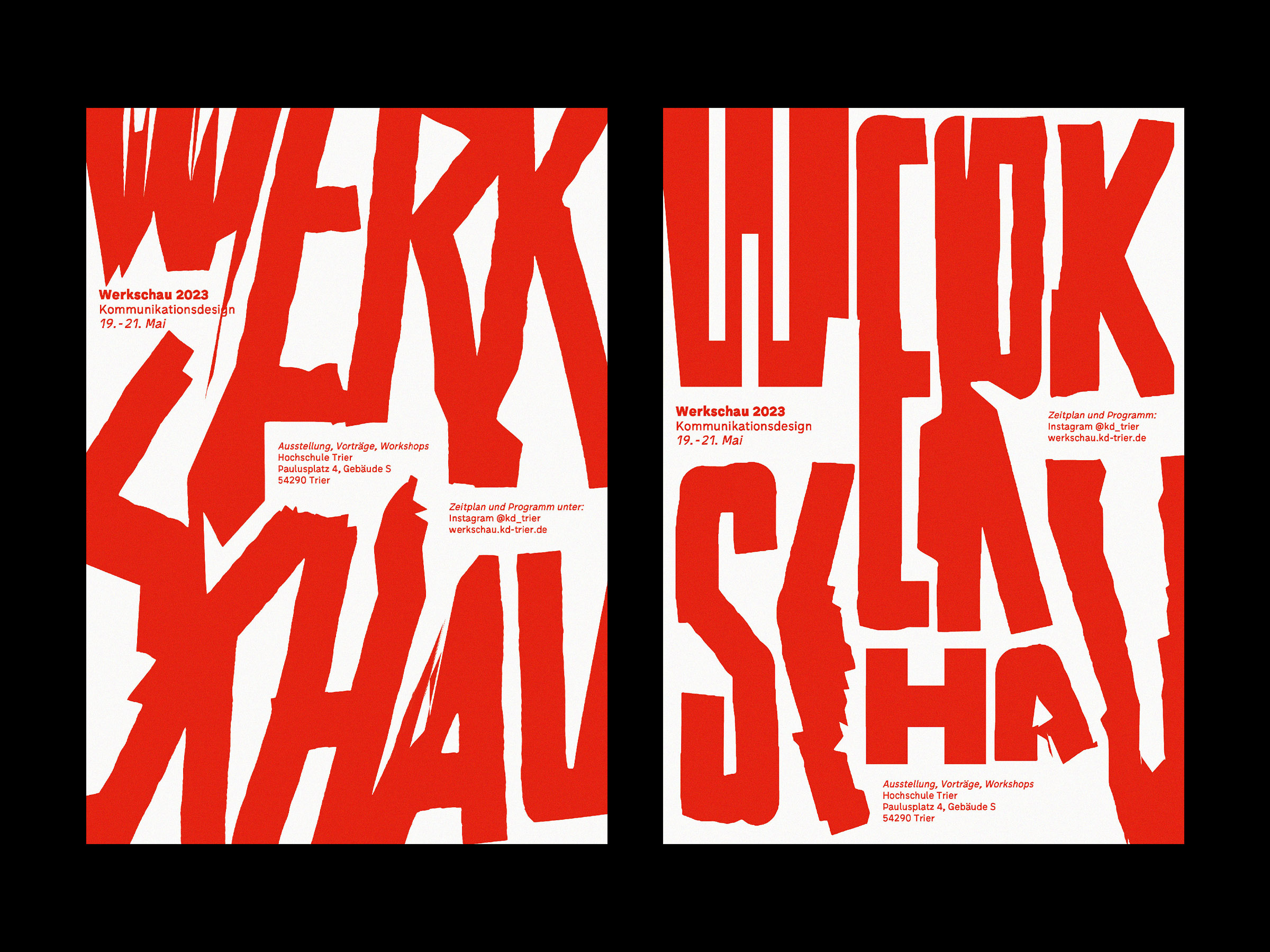
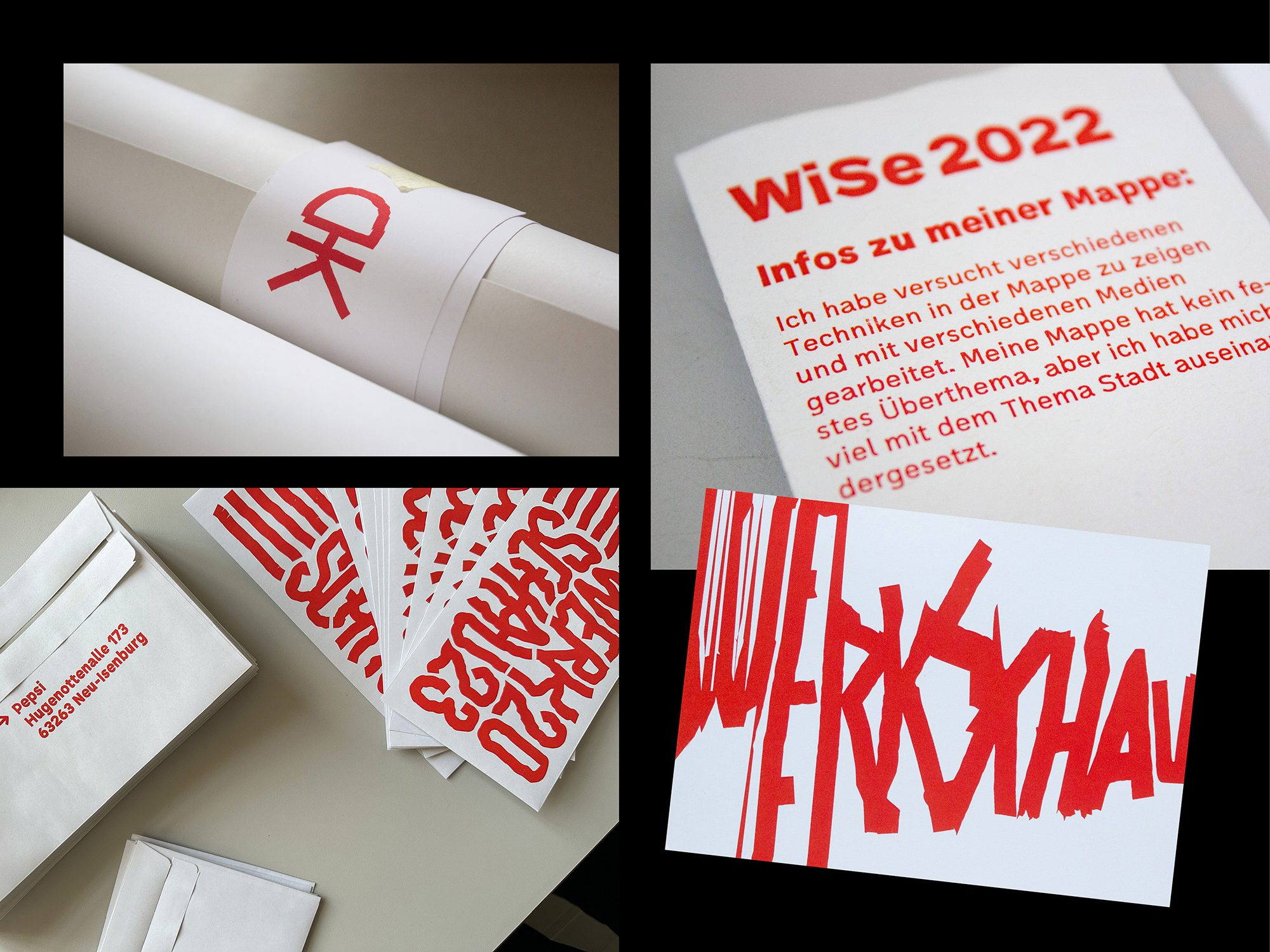
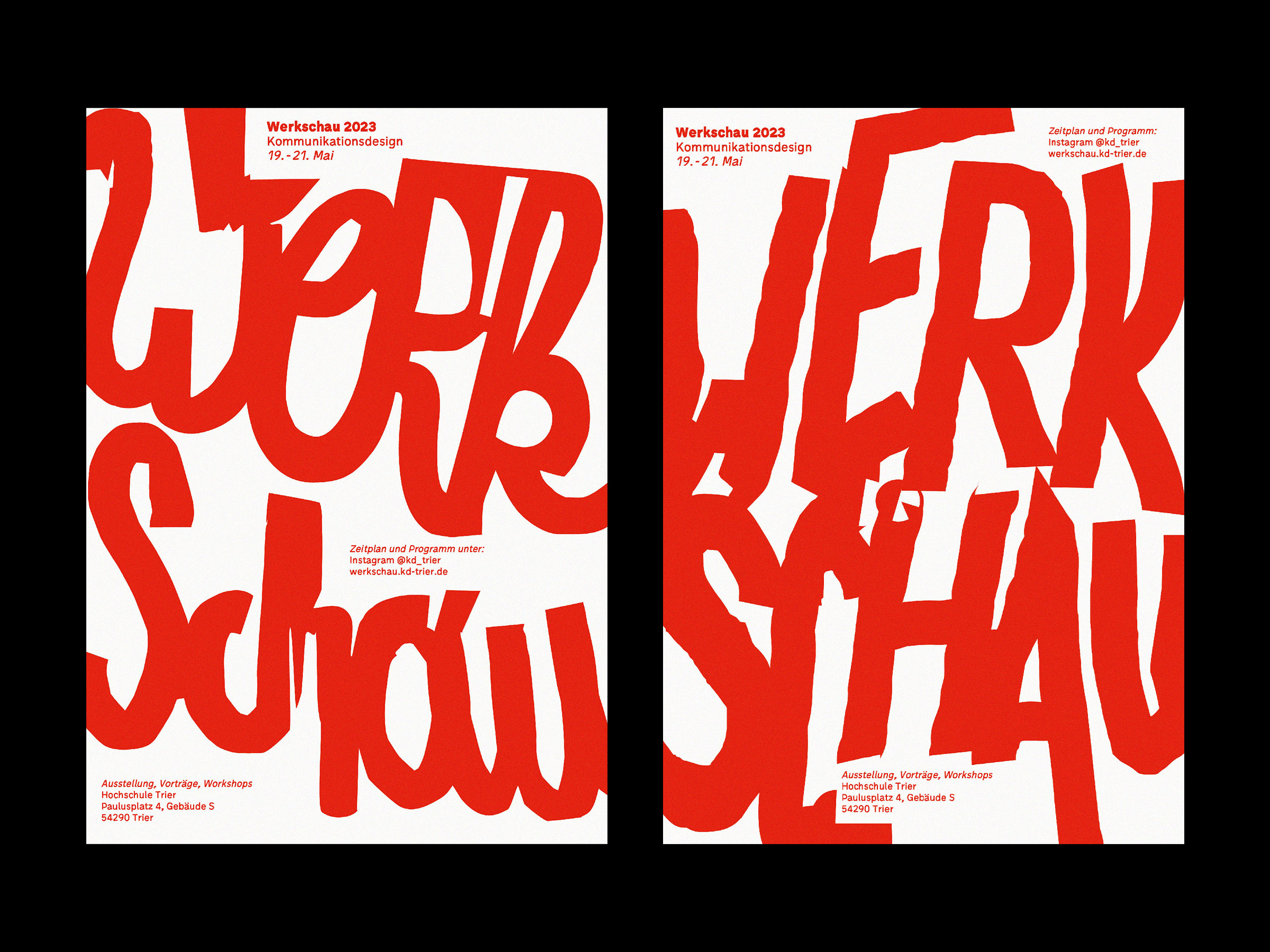
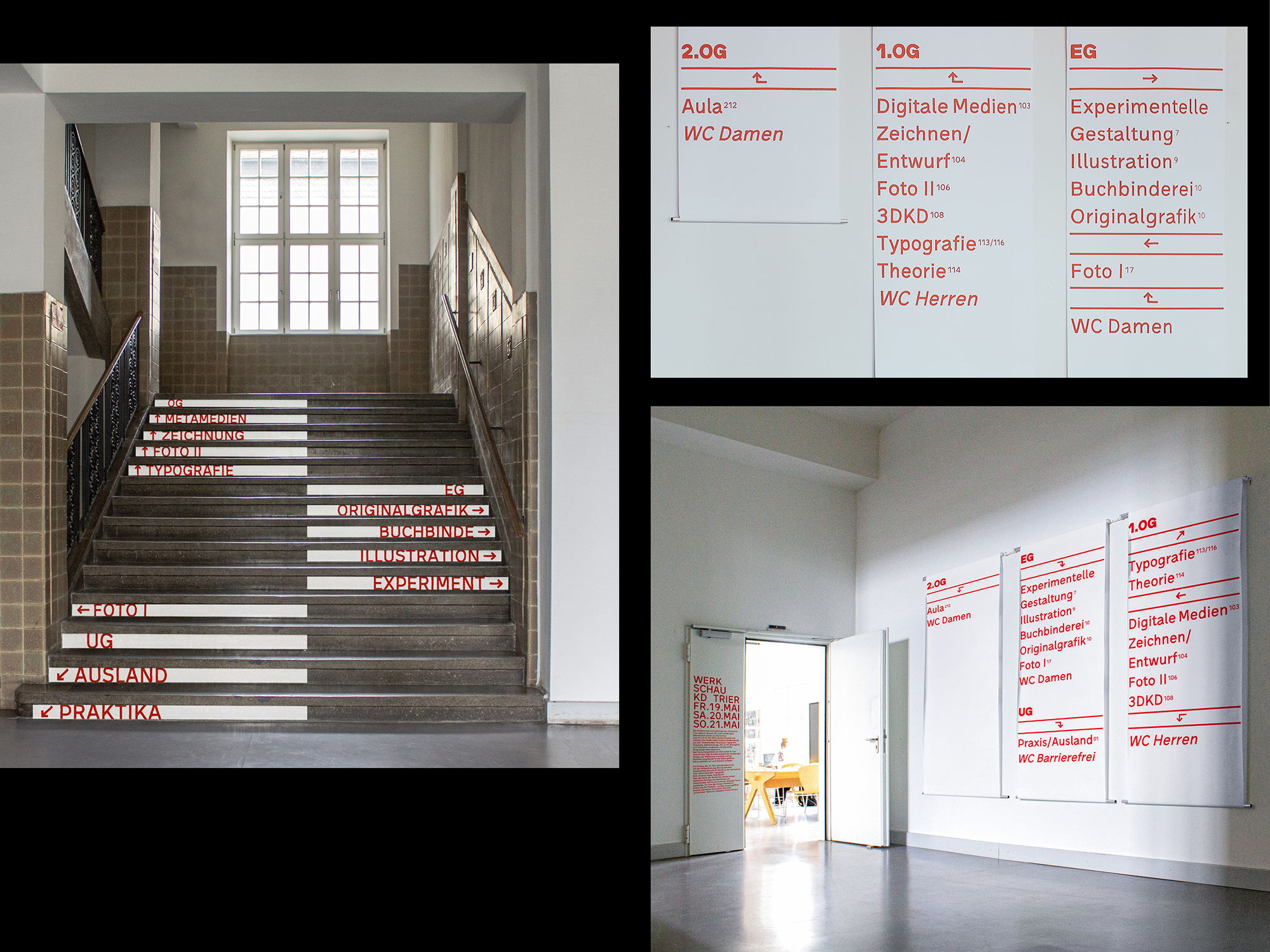
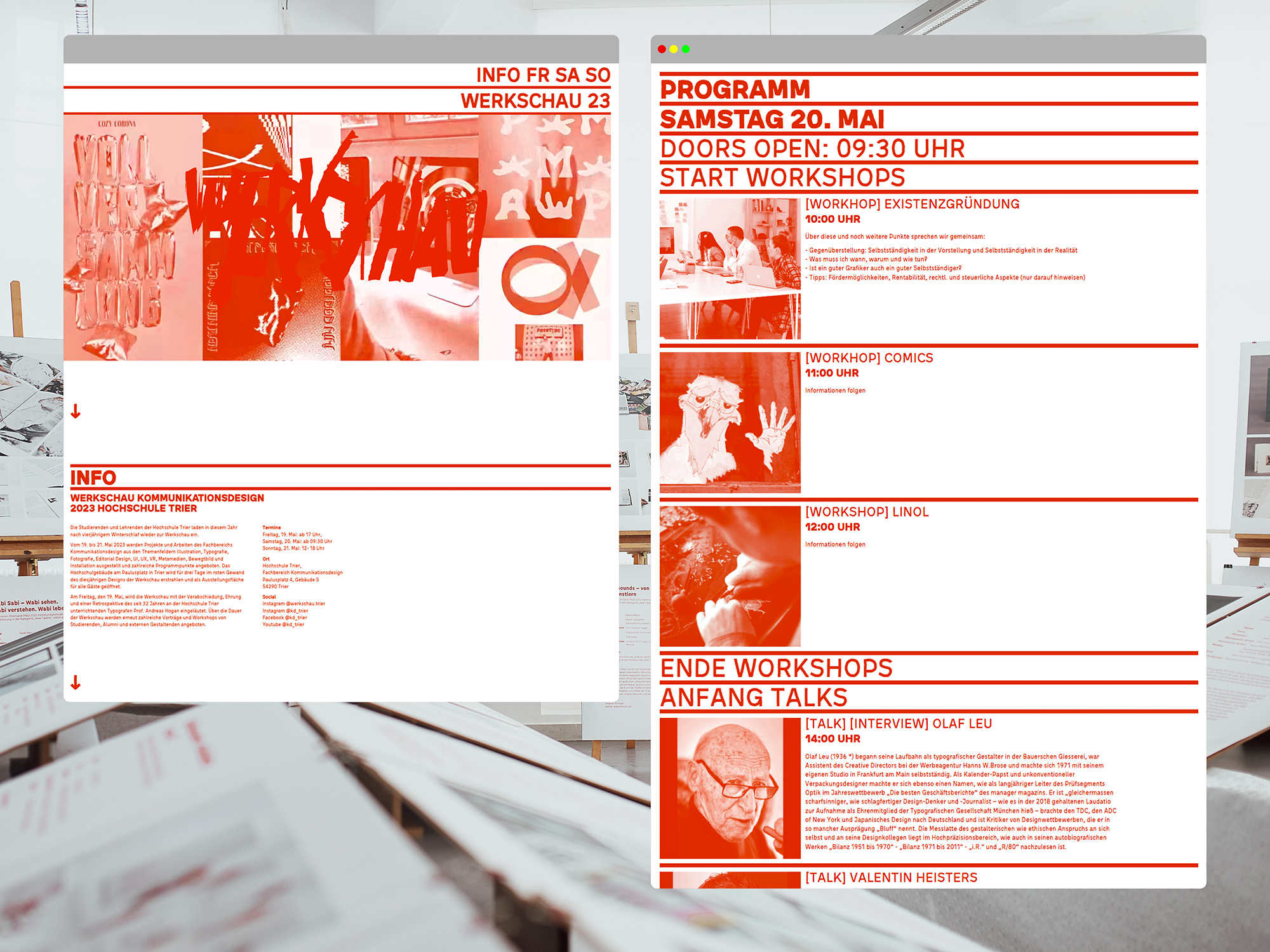
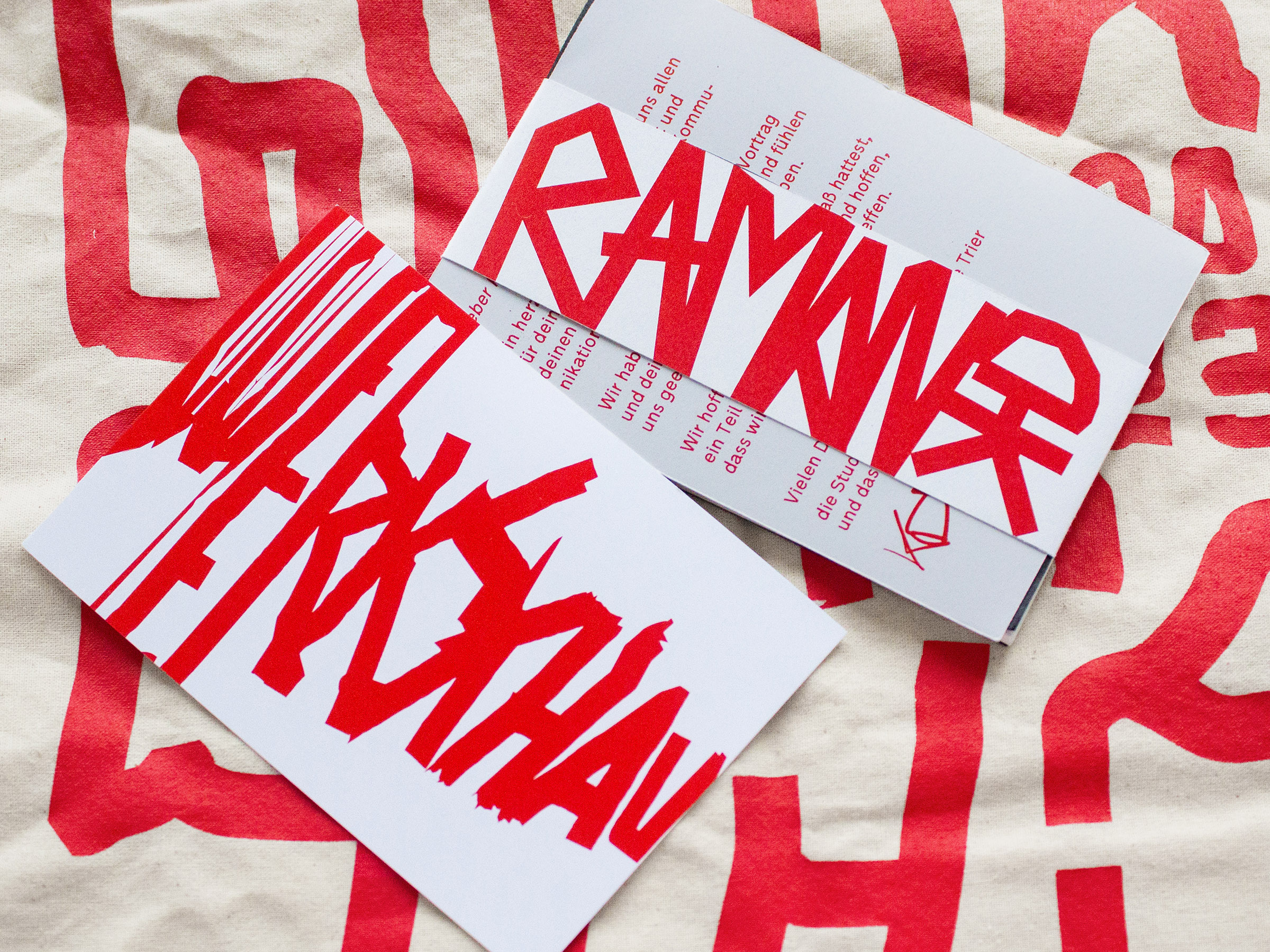
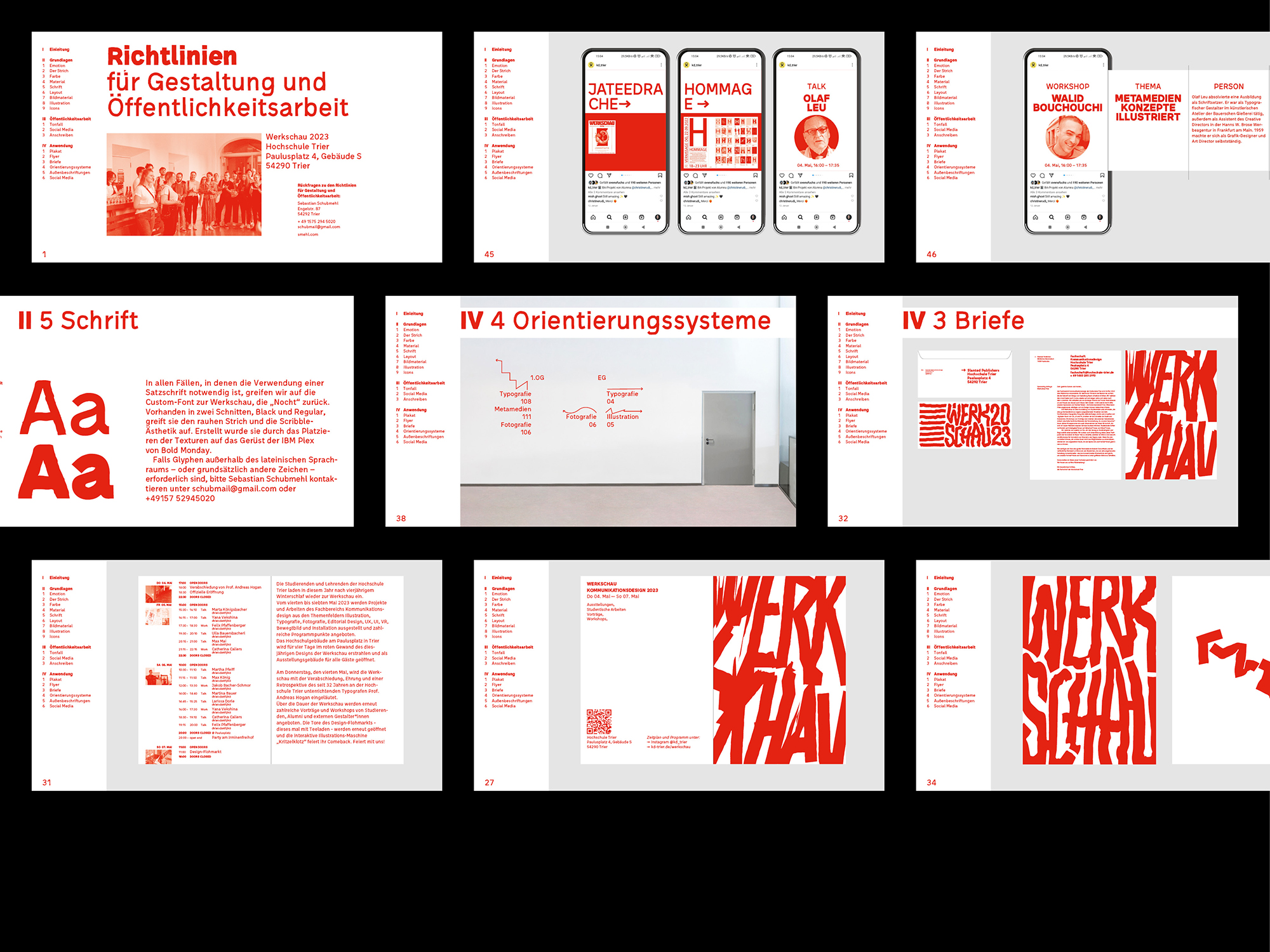
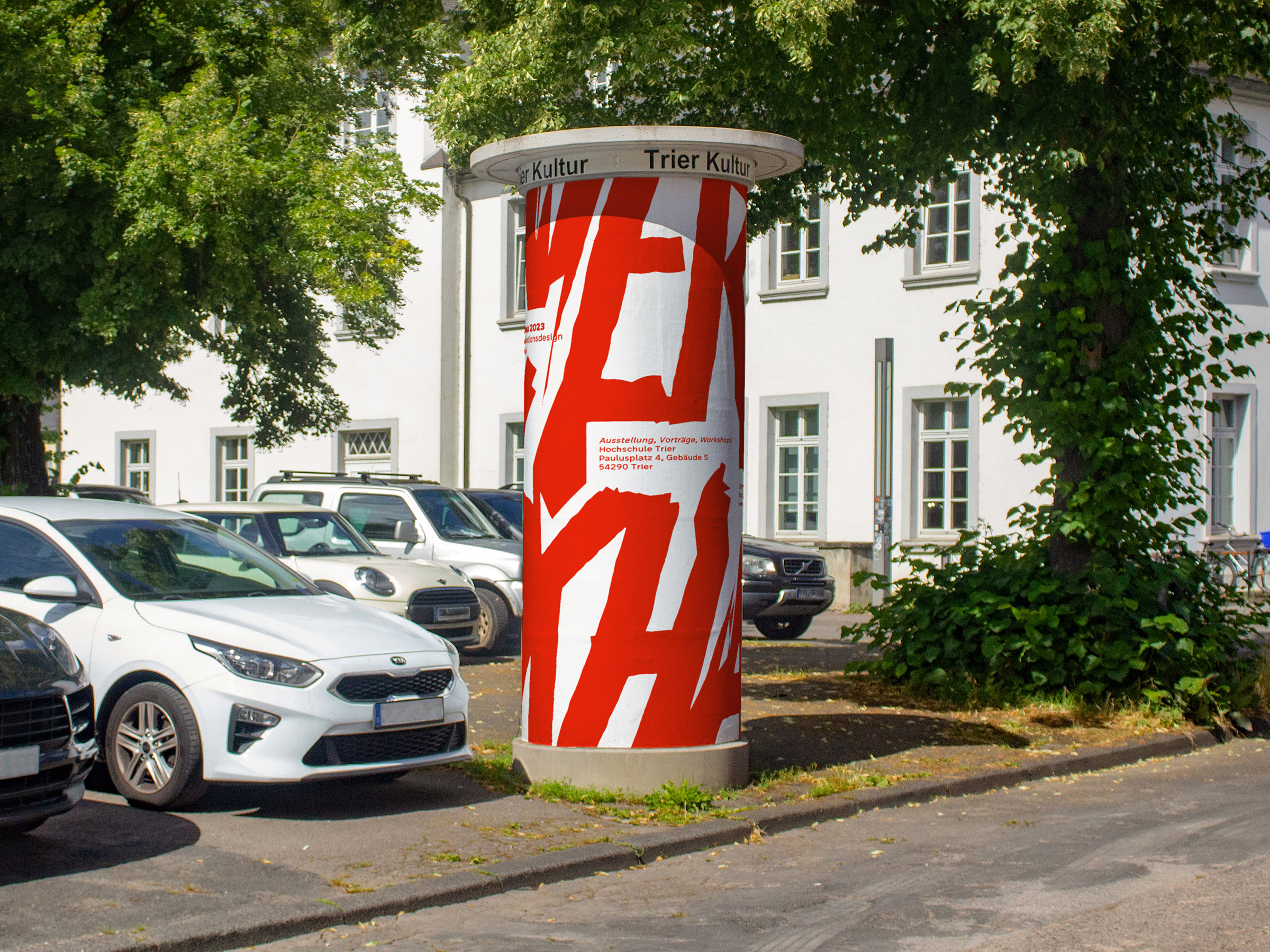
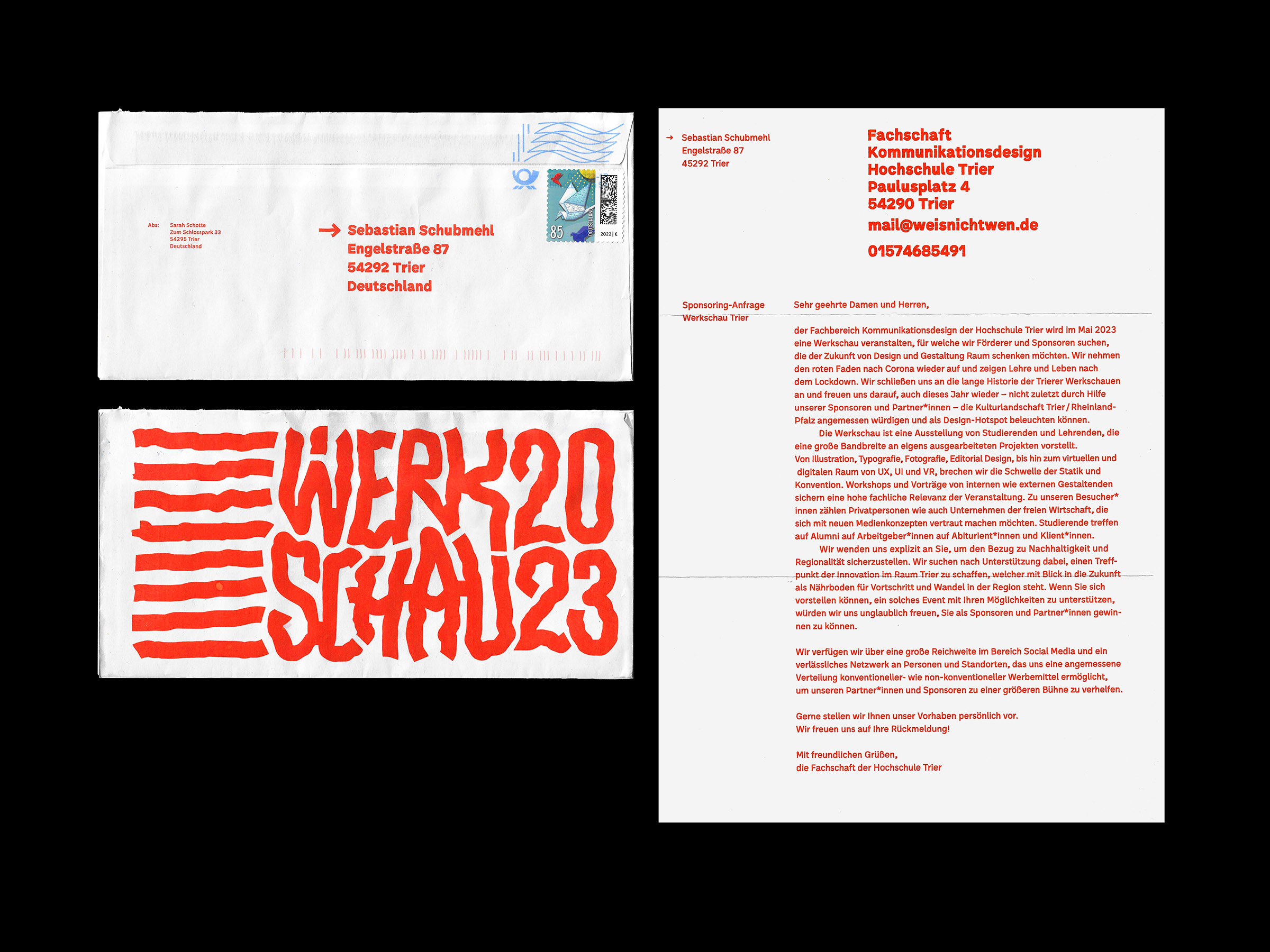
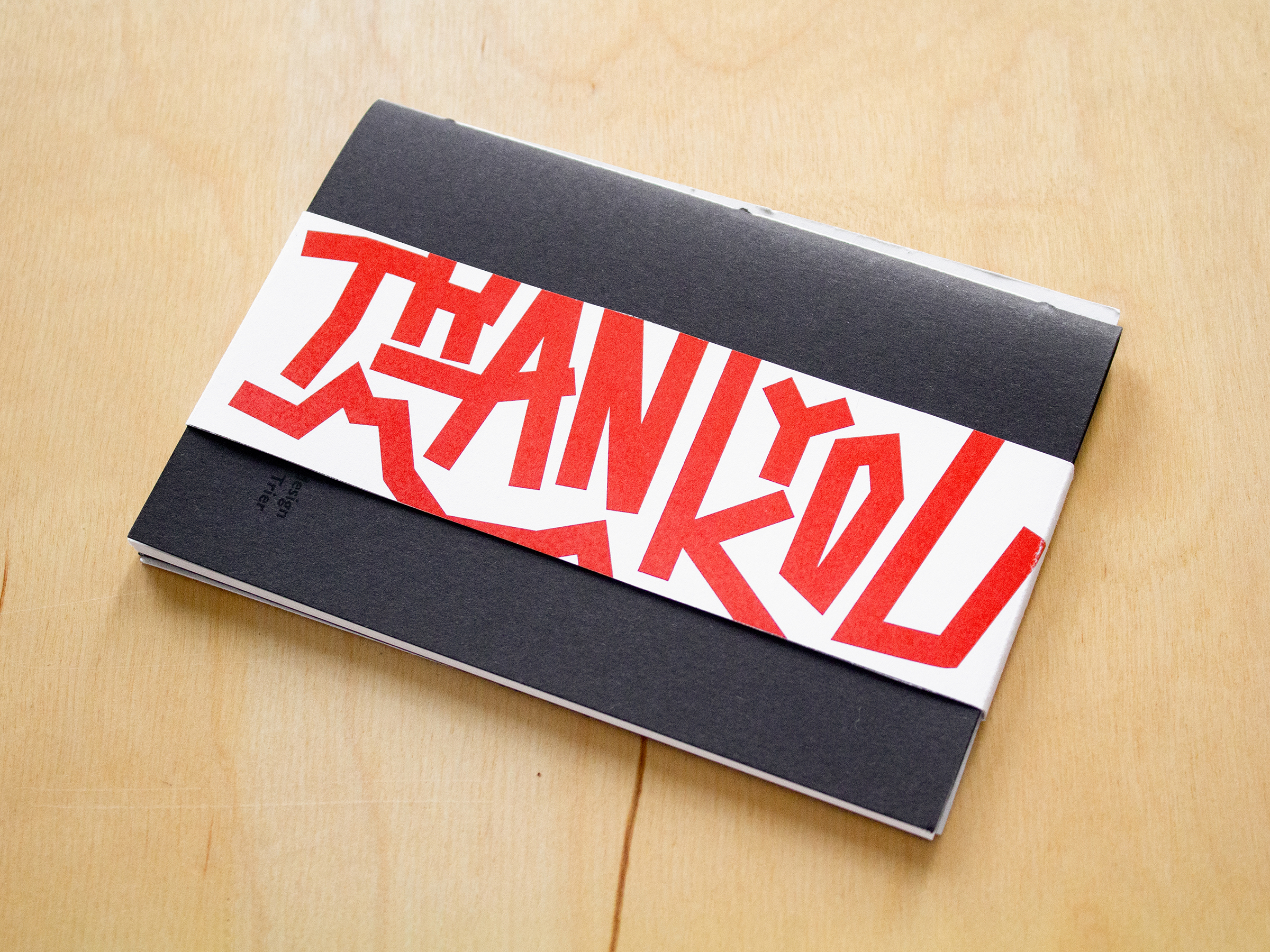
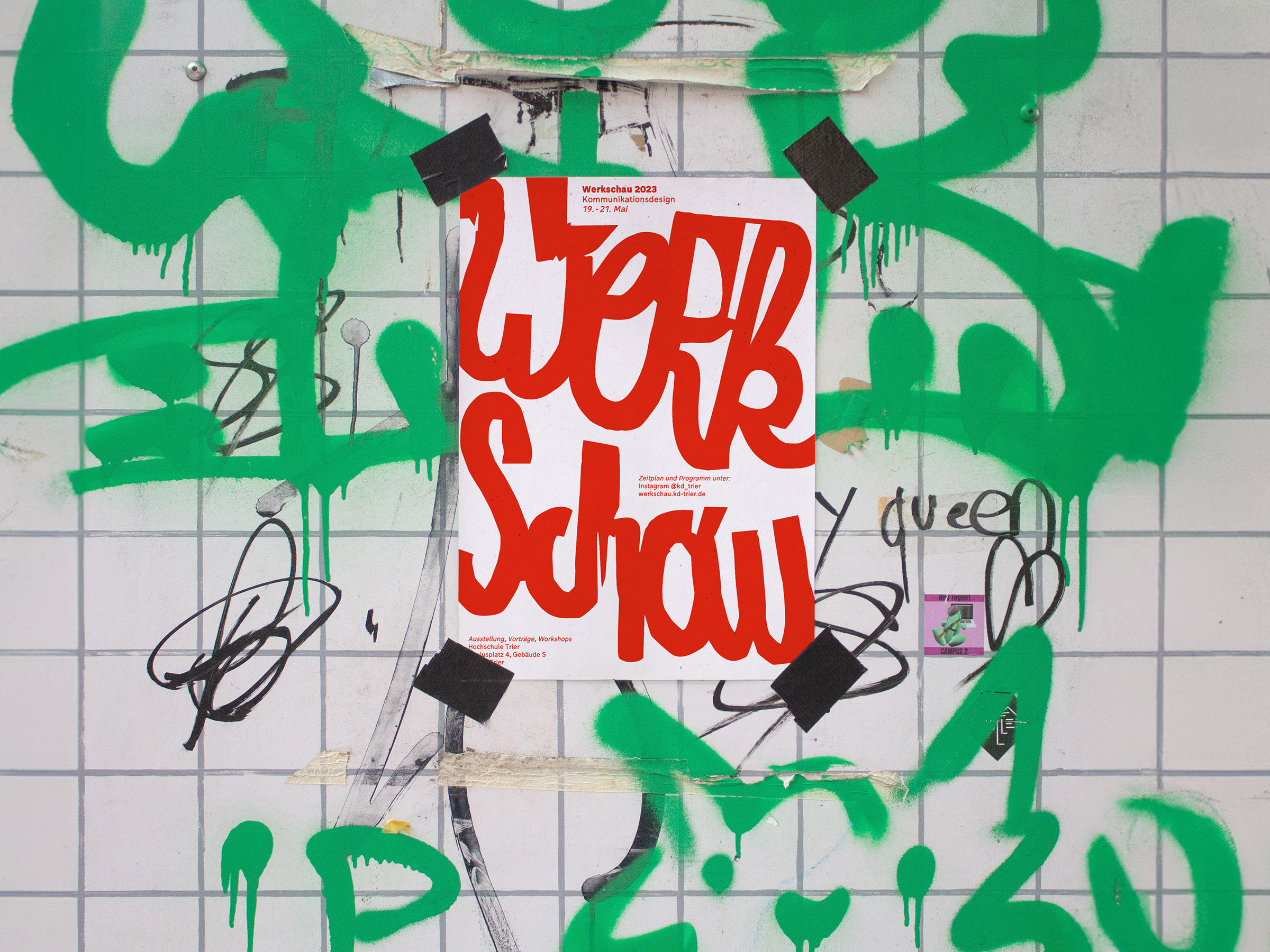
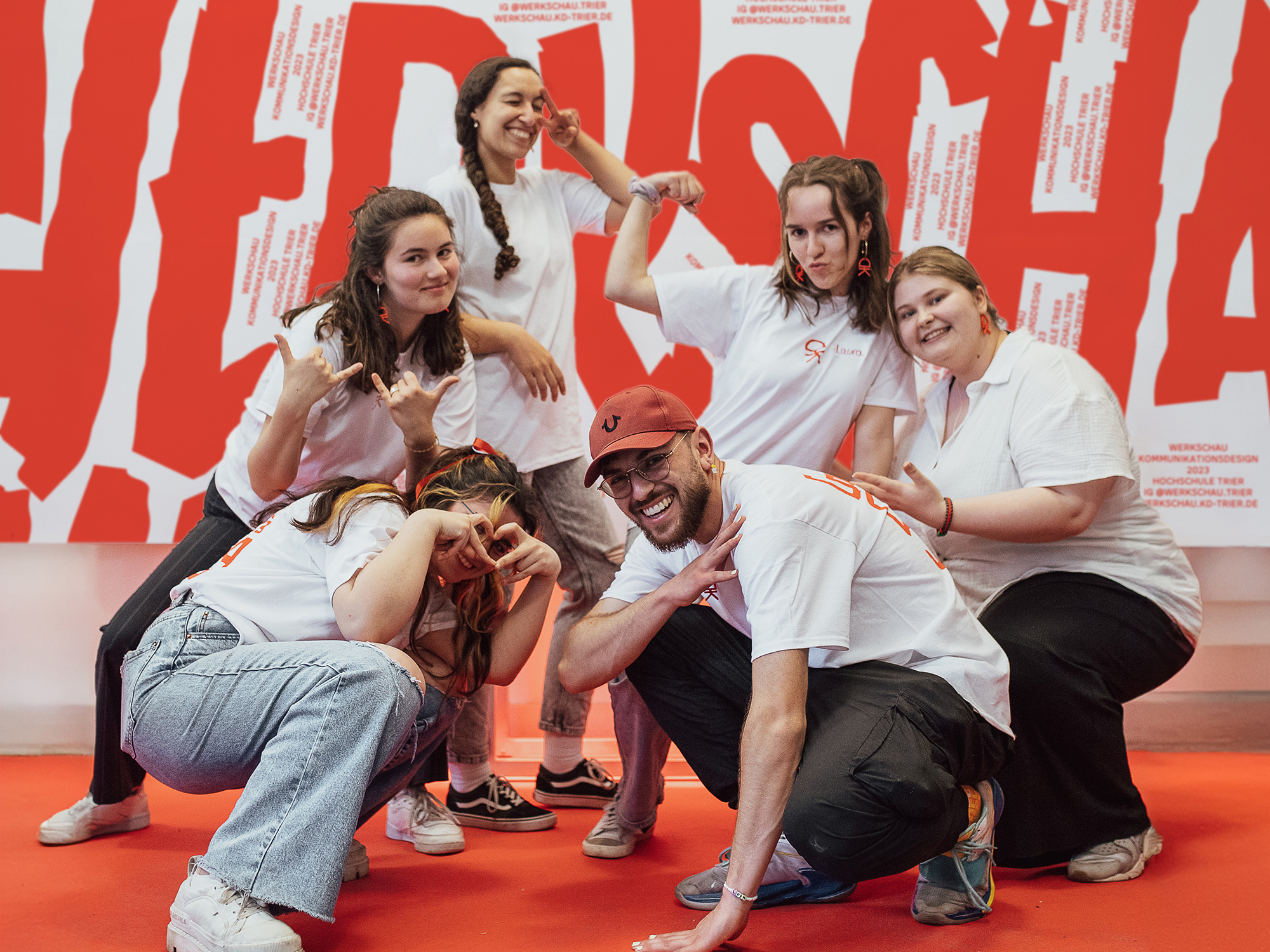
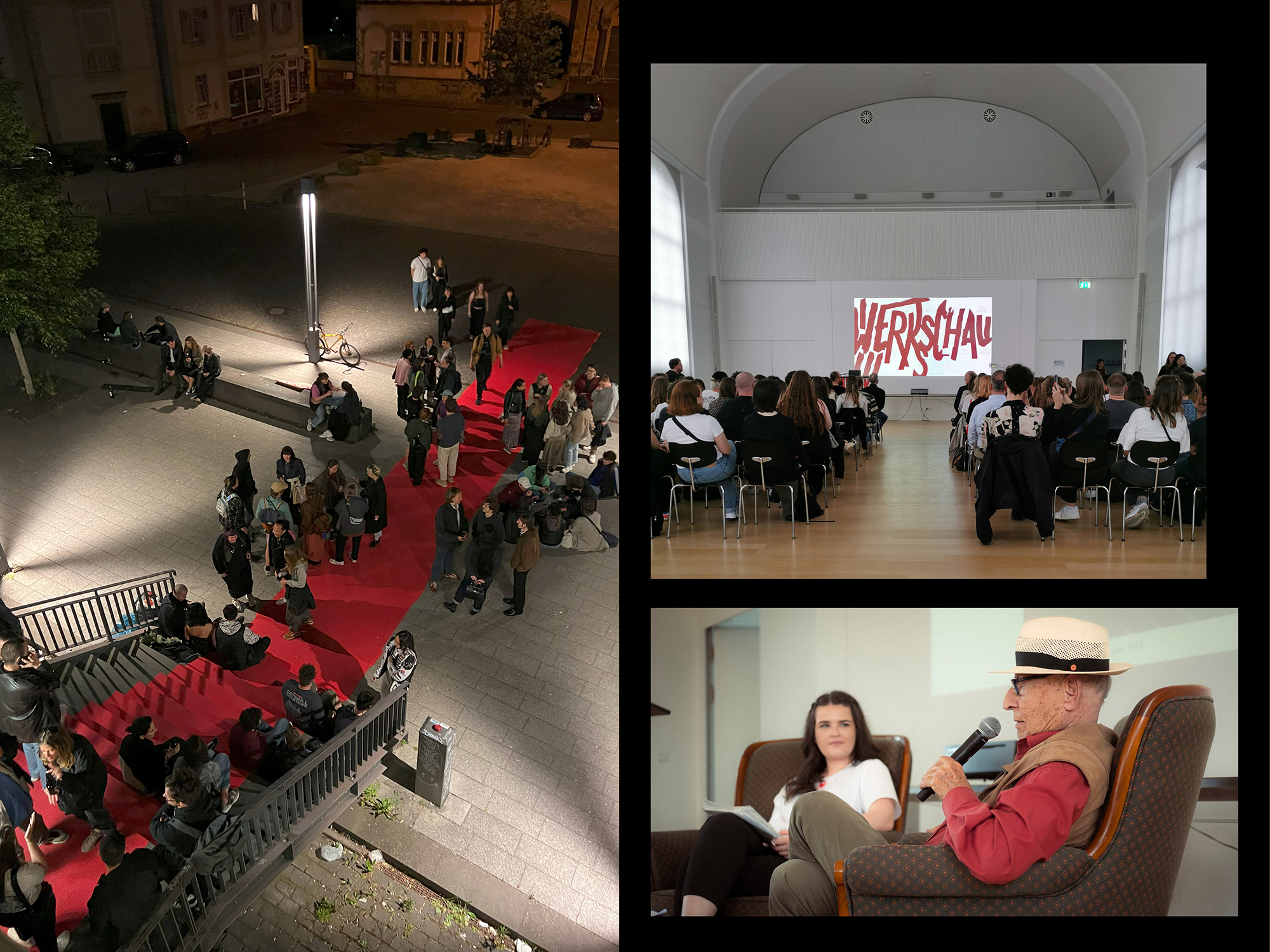
After a four-year hiatus, the students and faculty of Hochschule Trier once again invited visitors to the Werkschau Kommunikationsdesign. From May 19 to 21, 2023, the Communication Design department showcased a wide range of projects spanning typography, illustration, photography, editorial design, UI, UX, VR, metamedia, motion and installation. The program included numerous talks and workshops by alumni, students and external designers, among them corporate communication veteran Olaf Leu, typographer and type designer Sven Fuchs, illustration studio FOREAL, filmmaker, illustrator and animator Raman Djafari, art director of the Mystetskyi Arsenal Kyiv Lera Guievska, and many more. For three days, Paulusplatz glowed in the red of this year's visual identity – roll out the red carpet! The visual identity of the Werkschau is an ode to the scribble, the smudge, the unclean. Derived from the aesthetic of a mouse-operated pencil tool in InDesign (and its complete lack of path stabilization), it foregrounds a lack of control, high tempo and volume. The identity includes a comprehensive design guide, two custom fonts, numerous analog and digital applications including a website, social media and communication guidelines, facade signage, a wayfinding system and much more. Since a Werkschau had to be re-established in the Communication Design department at Hochschule Trier after a very long hiatus, the content and visual kickoff was meant to be bold and loud. Involving many students and all faculty was essential. Under guidance, many students contributed extensively to producing the communication media, the exhibition and many other areas, and were able to get deeply involved. To conserve resources, a dedicated team of students was formed that focused exclusively on sustainable material sourcing. For example, all adhesive tapes and films are made from pollutant-free combustible plastics, the banners for the building's exterior signage are reused and made from used materials, high-quality certified recycled papers are used, environmentally friendly screen printing is used wherever possible, and regional sourcing was consistently prioritized for printing and services as well. The Werkschau's visual identity was selected from 40 drafts as part of a student competition and was originally developed in a course taught by Prof. Andreas Hogan. The design was subsequently supervised and jointly developed further by Prof. Dirk Wachowiak. The poster series for the Werkschau was awarded by 100 Beste Plakate e.V. and is currently part of a traveling exhibition.
